
Last weekend I dedicated a variety of posts to women in the military in honor of Veterans Day. This post follows up on the experiences of military moms.
Figure 1: Percentage of Active-Duty Military Women with Children1
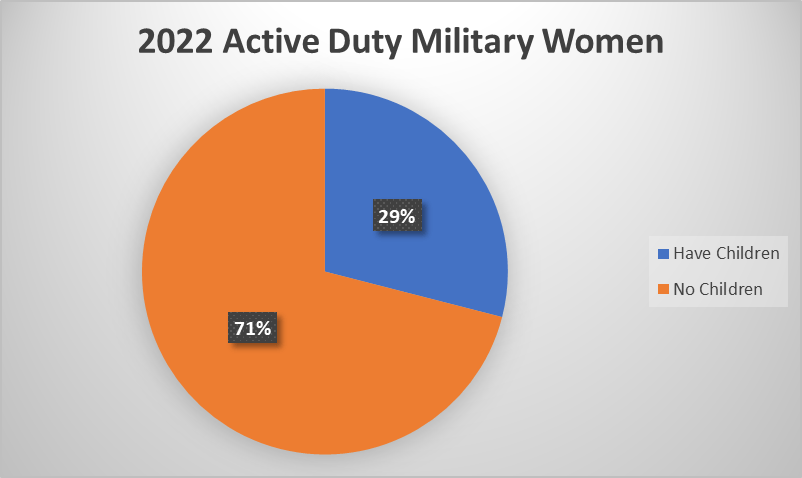
Over 71% of the active-duty military mothers were married and 97% had children under the age of 181. Most active-duty military mothers had children under the age of 51.
Figure 2: Percentage of Reserve Military Women with Children1
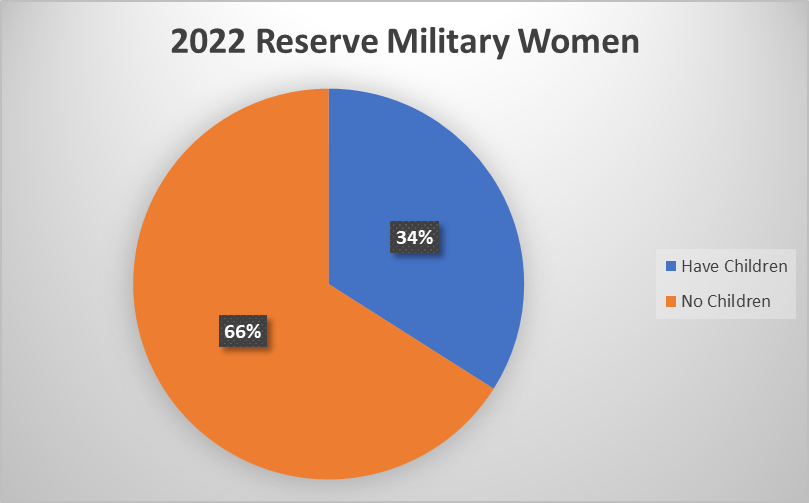
Over 60% of the women in the reserves were married and 93% had children under the age of 181. Among the mothers in the reserves there was an equal percentage of children under age 5 and children between ages 6-111.
The experience of pregnancy, breastfeeding, and parenting were factors that impacted the retention of women in the military2. It was noted that pregnant service women were often viewed negatively, with many perceiving that the servicewoman got pregnant to intentionally avoid work obligations and/or deployment2. The availability of maternity uniforms during pregnancy and the postpartum period were additional challenges reported2.
The Department of Defense supports the American Academy of Pediatrics recommendation of exclusive breastfeeding during the first 6 months; however, understands the unique challenges experienced by military women, such as physical fitness requirements, deployment, separation from the infant, and infrequent and demanding work schedules2. All branches of the active services (Army, Navy, Marine Corps, Air Force, and Coast Guard) require private lactation rooms that have access to water sources and are not restrooms; however only the Coast Guard requires refrigerated storage options2. Which means lactating military mothers in the Army, Navy, Marine Corps, and Air Force may not have the ability to store their pumped breast milk. The Army does not require the lactation room to be clean and sanitary and the Navy and Marine Corps are not required to provide seating options or electrical outlets in the lactation rooms2. Service women reported stigma related to asking to take breaks to pump and reported that despite policies being in place to support lactation barriers remained such as lack of access to water or having to pump in an empty office or service vehicle2.
The lack of childcare was a consistent barrier among military families, especially among those who were single parents2. In 2018 there were 23,000 childcare workers supporting 200,000 military children2. Waitlists for childcare services ranged between 4-6 months, with longer waitlists being seen in regions such as California and Hawaii2. Deployments pose a unique challenge given the number of military mothers who are deployed each year. Many military mothers experience extended time separated from their children. Each branch has post deployment family reintegration programs; however, they tend to be geared towards military fathers as opposed to mothers2.
The VA will be expanding pregnancy, postpartum, nutrition, and lactation services to veterans who are also mothers thanks to the Protecting Moms Who Served Act. This Act expanded care coordination services to all veterans during the perinatal period due to the recognition that veteran women disproportionately experience complications during pregnancy and postpartum. It also requires the VA to study racial and ethnic health disparities, which could be beneficial when considering the diversity among women who serve in the military.
References
- 2022 Demographic Dashboards: Interactive Profile of the Military Community. Military One Source Website. Accessed November 19, 2023. 2022 Demographics Dashboards – Demographics Dashboards (militaryonesource.mil)
- Defense Advisory Committee on Women in the Services 2019 Annual Report. Department of Defense. Published November 19, 2019.
 My Mind, My Body, My Journey™